Morrisville Borough School District levies 279.86 mills. New Hope-Solebury levies 127.97. Both are in Bucks County, both are about half an hour apart, and the one with the higher rate is the one with the cheaper houses. That inversion explains most of what people get wrong about school taxes here.
Thirteen public school districts serve Bucks County, out of roughly 500 statewide. They run from Central Bucks, one of the largest districts in Pennsylvania, down to Morrisville and its three schools for about 800 students. Here is all thirteen, using numbers the county and the Commonwealth actually publish.
The millage table
Millage is the rate applied to a property’s assessed value, and school millage is the largest line on almost every Bucks County tax bill. These figures come from the county’s official millage rate schedule.
| District | Mills | Municipalities served |
|---|---|---|
| Morrisville Borough | 279.86130 | Morrisville Borough |
| Bristol Township | 237.17440 | Bristol Township |
| Pennsbury | 211.14300 | Falls, Lower Makefield, Yardley, Tullytown |
| Neshaminy | 198.01240 | Middletown, Langhorne, Langhorne Manor, Penndel, Hulmeville, Lower Southampton |
| Bensalem Township | 188.94740 | Bensalem Township |
| Quakertown Community | 181.80000 | Quakertown, Richlandtown, Trumbauersville, Haycock, Milford, Richland |
| Centennial | 178.69920 | Ivyland, Upper Southampton, Warminster |
| Bristol Borough | 161.00000 | Bristol Borough |
| Central Bucks | 154.90000 | Chalfont, Doylestown and New Britain boroughs, Buckingham, Doylestown, Plumstead, Warrington, Warwick, most of New Britain Township |
| Council Rock | 149.96920 | Newtown Borough and Township, Northampton, Upper Makefield, Wrightstown |
| Pennridge | 144.39490 | Dublin, Perkasie, Sellersville, Silverdale, Bedminster, East Rockhill, Hilltown, West Rockhill |
| New Hope-Solebury | 127.97000 | New Hope Borough, Solebury Township |
| Palisades | 123.41400 | Bridgeton, Durham, Nockamixon, Springfield, Tinicum, Riegelsville |
For comparison, total county millage is 29.65. School districts take four to nine times that. If you want the full picture of county and municipal taxes, assessment and the 1972 base year, see our Bucks County relocation guide.
Reading the rate correctly
A high millage rate is not evidence of a lavish district. In most cases it is evidence of a small assessed tax base.
Morrisville is the smallest district in the county and carries the highest rate, roughly 2.3 times New Hope-Solebury’s. Bristol Township sits second highest and covers Levittown, Croydon and Fairless Hills, where prices are at the low end of the county. New Hope-Solebury and Palisades sit at the bottom of the table and cover some of the most expensive real estate in Bucks. A district with a large base raises the same dollars at a lower rate. A small base cannot.
So compare millage against home values, never in isolation.
The thirteen districts
Central Bucks
The giant. Central Bucks runs 23 schools: 15 elementary, 5 middle and three high schools, CB East, CB West and CB South. Three comprehensive high schools in a single district is unusual in Pennsylvania. The district’s own enrollment count is around 16,700, which puts it among the largest in the state. It covers Chalfont, Doylestown and New Britain boroughs plus five townships and most of New Britain Township.
Council Rock
Council Rock covers about 75 square miles with 16 schools: two high schools (North and South), two middle schools (Newtown and Holland), ten elementary schools and The STAR Center. One thing to get right: Churchville, Holland and Richboro are census-designated places inside Northampton Township, not municipalities of their own.
Pennsbury
Pennsbury serves Falls Township, Lower Makefield, Yardley Borough and Tullytown Borough with 15 schools, three middle schools and a single high school. Its millage sits well above districts of comparable enrollment, which is worth sitting with given that Yardley carries some of the higher home values in Lower Bucks.
Neshaminy
Neshaminy has the most distinctive grade structure in the county: six elementary schools running K through 4, three middle schools running 5 through 8, and one high school. Most Bucks districts run K-5 and 6-8, so a Neshaminy student changes buildings on a different schedule than a neighbor two townships over. The district also runs its own Virtual Academy. It serves Middletown Township, Langhorne, Langhorne Manor, Penndel, Hulmeville, Lower Southampton and the Middletown sections of Levittown.
Pennridge
Pennridge runs 11 schools across eight municipalities: Dublin, Perkasie, Sellersville and Silverdale boroughs, and Bedminster, East Rockhill, Hilltown and West Rockhill townships. That means eight sets of local politics feeding one school board.
Bensalem Township
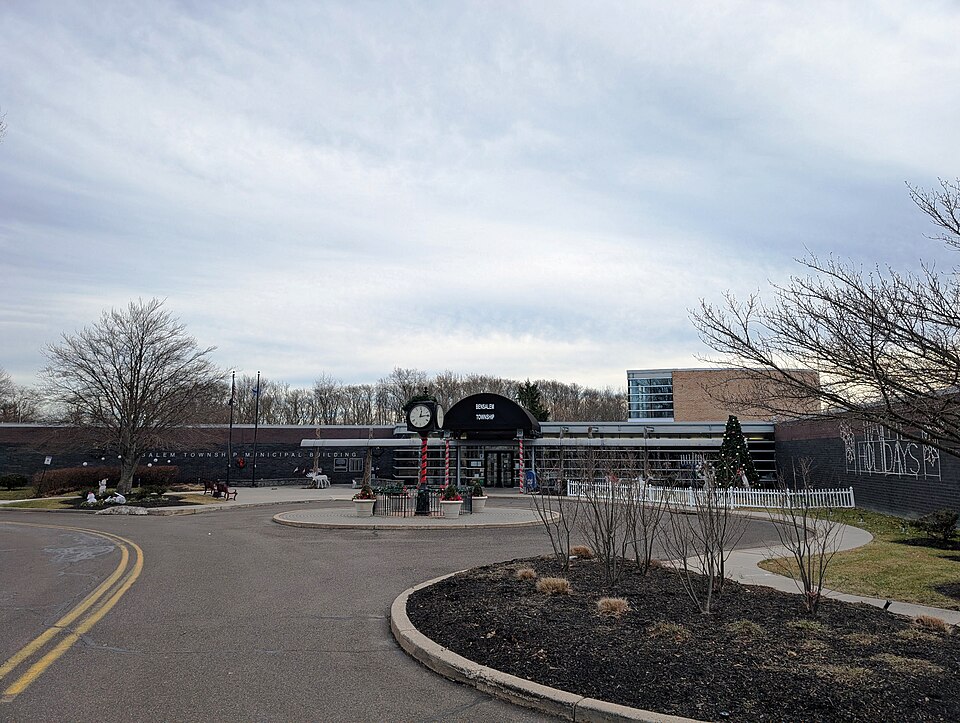
Bensalem covers about 21 square miles and serves exactly one municipality. Nine schools, with Bensalem High School established in 1923. School Lane Charter School, a K-12 brick-and-mortar charter, also operates in the township.
Bristol Township
Bristol Township consolidated aggressively and now runs just six schools: three elementary, two middle and Harry S. Truman High School in Levittown. It serves Bristol Township including Levittown, Croydon and Fairless Hills, and carries the second highest millage in the county. Pair that rate with the district’s home prices and you have the clearest high-rate, low-base case in Bucks.
Centennial
Centennial runs seven schools: William Tennent High School, Log College Middle, Eugene Klinger Middle, three elementary schools and an alternative school. It serves Ivyland Borough, Upper Southampton and Warminster townships, with offices in Warminster at 215-441-6000.
Quakertown Community
Quakertown Community covers 72 square miles in Upper Bucks. The district’s own site lists nine schools, including a standalone Sixth Grade Center and The Academy at Quakertown, so the structure does not map neatly onto the usual elementary-middle-high pattern. It serves Quakertown, Richlandtown and Trumbauersville boroughs and Haycock, Milford and Richland townships. The district office is at 215-529-2000.
Palisades
Palisades carries the lowest school millage in Bucks County at 123.41. It is the most rural district, with five schools: Durham Nockamixon Elementary, Springfield Elementary, Tinicum Elementary, Palisades Middle School and Palisades High School. It serves Bridgeton, Durham, Nockamixon, Springfield and Tinicum townships plus Riegelsville Borough.
New Hope-Solebury
New Hope-Solebury has the second lowest millage at 127.97 and four schools: Lower Elementary, Upper Elementary, Middle and High. It serves New Hope Borough and Solebury Township, including the villages of Lahaska, Carversville and Lumberville. Lowest rates, highest home values, small enrollment. It is the sharpest illustration of the tax-base effect in the county.
Bristol Borough
Bristol Borough operates two schools for one municipality: Bristol Jr./Sr. High School and Snyder-Girotti Elementary. A K-12 district this compact is rare.
Morrisville Borough
Morrisville is the smallest district in Bucks, roughly 800 students in three buildings: Grandview Elementary (K-2), Morrisville Intermediate (3-5) and Morrisville Middle/Senior High (6-12). It serves Morrisville Borough alone and levies the highest rate in the county by a wide margin. Smallest district, highest rate. The two facts are connected.
Career and technical education
There is no Bucks County School District, and the county’s technical high schools are not one. They are operated by joint committees of the districts that send students to them.
- Bucks County Technical High School, 610 Wistar Road in Fairless Hills, serves grades 9 through 12 with around 1,465 students and a 13:1 student-teacher ratio across five program areas: Business and Art Technology, Construction, Health and Human Services, Manufacturing, and Transportation. It draws from six sending districts: Bensalem, Bristol Borough, Bristol Township, Morrisville, Neshaminy and Pennsbury.
- Middle Bucks Institute of Technology, 2740 York Road in Jamison, serves the central part of the county with hands-on programs and industry certification.
- Upper Bucks County Technical School covers the northern districts.
Which technical school your district sends to matters if your student wants a trade or a certification track. Confirm it with your district, because sending relationships are set by agreement and can change.
Act 1 and how much taxes can rise
Pennsylvania caps how much a school district can raise taxes without either a Department of Education exception or a voter referendum. The cap is the Act 1 index.
The base index is the average of the percent increase in the Pennsylvania statewide average weekly wage and the federal employment cost index for elementary and secondary schools. Districts with a market value to personal income aid ratio above 0.4000 get an adjusted index: the base multiplied by 0.75 plus the aid ratio. The Department’s own worked example is a 2.4 percent base with a 0.6000 aid ratio, which produces 3.2 percent.
Read that formula twice and the counterintuitive part surfaces. Less wealthy districts get a higher ceiling. They are allowed to raise rates faster, because their aid ratio is higher. So the districts already at the top of the millage table are also the ones with the most statutory headroom to keep climbing. The base index is set annually and published by the Department, so check the current figure rather than assuming.
Performance data, and how to read it
The authoritative source is the Future Ready PA Index, run by the Department of Education. It publishes, for every district and every school: proficiency in Math, Science and English Language Arts; annual academic growth in each subject; regular attendance rate; English learner growth; career standards benchmark; four-year cohort graduation rate; and demographics including percent economically disadvantaged, percent English learners and percent students with disabilities.
We are not reprinting those figures here, because they are revised every year and a stale table is worse than no table. Pull them yourself. But pull the right ones.
Proficiency correlates heavily with household income. A district with few economically disadvantaged students posts high proficiency almost regardless of what its teachers do, and a district with many posts lower proficiency even when instruction is strong. Ranking sites weight proficiency heavily, which is why their rankings reproduce a map of local income.
Academic growth is the better measure. It asks how much a school moved its students over a year, which is far fairer across districts with different starting points. When you open Future Ready, do this in order:
- Look at growth in ELA and Math first.
- Then look at proficiency, with the percent economically disadvantaged column open next to it. Read the two together, never separately.
- Then check the four-year cohort graduation rate and regular attendance.
Charter and cyber options
Pennsylvania charter schools are tuition-free public schools. Brick-and-mortar charters are authorized by the local school board. Cyber charters are authorized directly by the Department of Education and enroll students statewide. Funding follows the student: the resident district pays the charter a per-student rate derived from the district’s own expenditures, with a higher rate for special education students, which is why districts routinely cite charter tuition as a budget pressure. Oversubscribed charters admit by lottery. School Lane Charter School in Bensalem is the best known brick-and-mortar charter operating in Bucks.
One distinction parents mix up constantly: Neshaminy’s Virtual Academy is a program the district runs itself, not a cyber charter. Students stay enrolled in Neshaminy, the district keeps the funding and controls the curriculum. A cyber charter is a separate school with separate governance. Confirm current charter rules with the Department of Education before deciding.
Private, parochial and independent schools
Holy Ghost Preparatory School in Bensalem is an all-boys Catholic school. Conwell-Egan Catholic in Fairless Hills operates under the Archdiocese of Philadelphia, which runs 15 high schools across the region. Faith Christian Academy and Quakertown Christian School serve the county’s Protestant and Mennonite communities.
The Quaker and independent day schools are the part outsiders miss, and they are a real Bucks tradition. George School in Newtown is a Quaker boarding and day school with an international student body and an International Baccalaureate program. Solebury School in New Hope is a small independent day and boarding school. Buckingham Friends School, founded by the Buckingham Monthly Meeting, runs pre-K through eighth grade. These schools predate most of the districts around them, with Quaker practices like silent meeting built into the week.
How to evaluate a Bucks County district
- Start with growth, not proficiency. Future Ready publishes both. Growth tells you what the school did. Proficiency largely tells you who enrolled.
- Read proficiency next to percent economically disadvantaged. Always together. The gap between districts shrinks dramatically once you do.
- Check millage against home price. Morrisville’s 279.86 and New Hope-Solebury’s 127.97 are not comparable without the assessed base behind them.
- Look at scale and structure. Central Bucks runs three high schools and 23 buildings. Morrisville runs three buildings total. Neither is better in the abstract, and the right answer depends on your kid.
- Check grade configuration. Neshaminy’s K-4 and 5-8 split means a different number of building transitions than a K-5 and 6-8 district. For some students that matters a lot.
- Find out which technical school the district sends to, and visit it if career and technical education is on the table.
- Attend a board meeting and read the budget. Act 1 decisions and exception requests are public, and they tell you where the district is heading in a way last year’s test scores cannot.
- Treat Niche and GreatSchools as what they are. Third-party ratings that weight proficiency heavily and therefore reproduce income effects. Use the Department of Education for anything numeric.
- Verify the address, not the town. District boundaries do not follow municipal lines cleanly. Central Bucks takes most of New Britain Township. Levittown is split across Bristol Township, Pennsbury and Neshaminy. Before you sign, confirm the assigned schools for the exact property.
You can browse the communities inside each district on our Bucks County towns index.
Sources and Further Reading
- Bucks County official millage rate schedule
- Future Ready PA Index, PA Department of Education
- PA Department of Education, Act 1 index
- Central Bucks School District
- Council Rock School District
- Pennsbury School District
- Neshaminy School District
- Pennridge School District
- Bensalem Township School District
- Bristol Township School District
- Centennial School District
- Quakertown Community School District
- Palisades School District
- New Hope-Solebury School District
- Bristol Borough School District
- Morrisville Borough School District
- Bucks County Technical High School
- Middle Bucks Institute of Technology
- Upper Bucks County Technical School
- Moving to Bucks County: The Complete Relocation Guide
- Bucks County towns index
Millage rates, enrollment counts and state data are updated annually. If you spot a figure that has moved or an error we should fix, send us a correction.