You can stand on Main Street, look toward the water, and still see why this place caught on three centuries ago. New Hope did not begin as a weekend stop for shopping and dinner. It began as a working river crossing, a mill town, and a place where the Delaware decided where people, goods and money would move, according to a new LevittownNow history report by Elizabeth Fisher.
The piece lands at a good time for Bucks County. The county’s river towns keep selling postcards, drawing visitors and fighting over parking, flooding and preservation. The old geography is still running the show.
New Hope started as a ferry crossing and mill town
According to LevittownNow, what is now New Hope began around 1700, when Quaker Edward Heath received a commission from William Penn for 8,000 acres. The report says Quaker families followed, pulled in by rich soil and the kind of river access that could make a settlement useful fast.
LevittownNow reported that the village first grew around mills producing flour from wheat and corn, with brick and lumber mills added later. That makes sense as background too. River towns across Bucks County were built to move raw materials and finished goods before anyone here had to worry about weekend traffic on Route 32.
The crossing itself came first. LevittownNow says John Wells started a ferry business in 1719 between the Pennsylvania and New Jersey sides of the Delaware. After the Coryell family took over, the place became Coryell’s Ferry. Long before New Hope had a brand, it had a job.
That wider river story still frames the town. The Delaware River Basin Commission describes the Delaware as one of the East Coast’s defining watersheds, and New Hope sits on one of its most visible bends. The river was never scenery first. It was infrastructure.
Fire, mills and a bridge changed New Hope’s future
LevittownNow says a flour mill fire in 1790 became the turning point that gave the town its current name. After rebuilding the mills, owner Benjamin Parry renamed the community New Hope. It is one of those local stories that sounds almost too neat, but it stuck because the name matched the sales pitch. Rebuild the mills, restart trade, keep going.
The report also traces how the river crossing changed again in the 1800s. LevittownNow says a wooden covered bridge went up in 1814, replacing some of the ferry trade, and a second covered bridge followed in 1841 before the river destroyed it. That pattern is familiar in river towns. Build, flood, rebuild, repeat.
As background, the Pennsylvania Historical and Museum Commission has long treated river communities like New Hope as a core part of the state’s early transportation and industrial history. You can feel that in town even if you never crack open a history book. The street grid hugs the river. The older buildings sit where commerce used to work best. The crossing to Lambertville is still the whole deal.

What This Means for Bucks County Residents
For people who live here, this is more than a nice origin story. The same river geography that made New Hope prosper still shapes daily life. Flood risk, traffic backups, bridge work, tourism pressure and preservation fights all hit harder in towns that were laid out centuries before cars and stormwater rules, as agencies like the Delaware River Basin Commission and local officials keep dealing with in different ways.
It also explains why New Hope keeps punching above its size. The town is still one of the county’s best-known destinations, and Visit Bucks County continues to market the riverfront, downtown and historic character as a big part of that draw. If you follow our New Hope coverage, or browse more of our Bucks County news coverage, the same pattern shows up over and over: old places stay popular because the bones were good in the first place.
There is also a countywide angle here. LevittownNow reported that Bucks shares about 60 miles of the Delaware, from Riegelsville down to Bensalem. New Hope gets plenty of attention, but it is part of a longer chain of river towns, including places like Bristol that grew for the same basic reason. If you read our Bristol coverage, you see the same river logic at work in a different setting.

Where New Hope’s river history still shows up now
LevittownNow points readers toward a few of the clearest holdovers, including the Parry Mansion and the town’s long memory around its mills, ferries and bridge crossings. The local built environment still does a lot of the explaining for you. Walk a block or two and the history is not hidden. It is sitting right there in the street pattern and the riverfront.
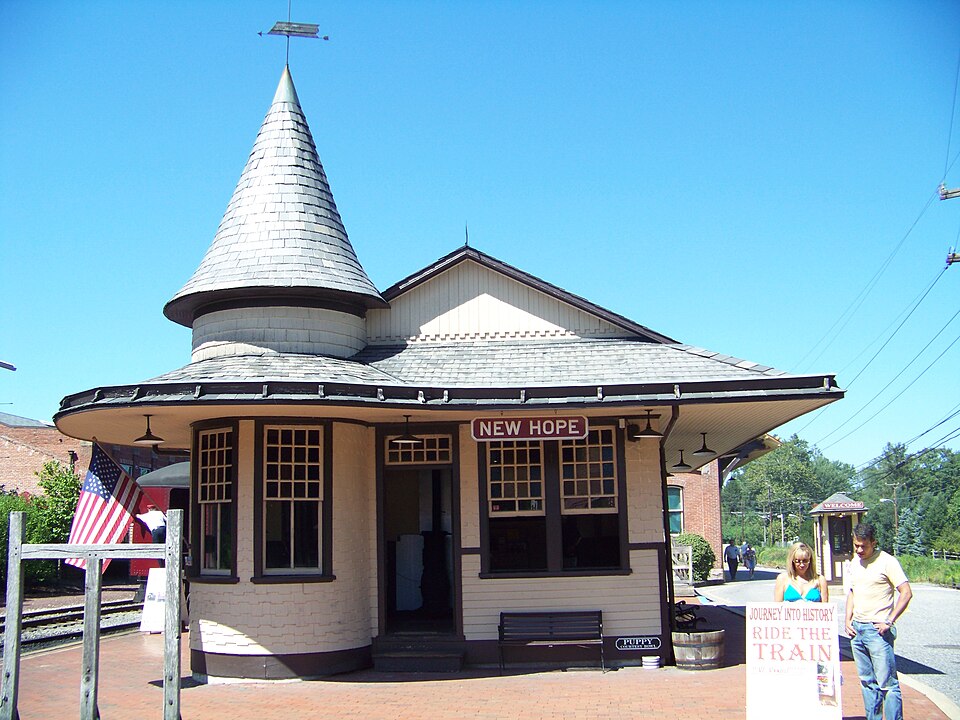
The town’s present-day visitor economy also leans hard on that past. The borough of New Hope promotes its historic downtown, while the New Hope Railroad keeps another piece of transportation history active for locals and visitors. None of that came out of nowhere. It grew from the same river access and early commercial energy that Fisher’s report lays out.
If anything, the story is a reminder that New Hope was built for work before it was built for charm. The charm came later, and then it paid the bills in a different way.

If you want to follow the thread in person, check the New Hope Borough website for riverfront updates and local meetings, and watch the New Hope Railroad calendar or town tour listings before the fall weekend crowds get thicker.
Sources and Further Reading
- LevittownNow – Source report on how the Delaware River helped shape New Hope.
- Bucks County government – Official county website with local government and regional information.
- Delaware River Basin Commission – Interstate agency overseeing the Delaware River watershed.
- Pennsylvania Historical and Museum Commission – State history agency with context on Pennsylvania’s historic communities.
- Visit Bucks County – Official tourism site for Bucks County destinations and attractions.
- New Hope Borough – Official borough website for local government and community information.
- New Hope Railroad – Official site for the historic railroad operating in New Hope.