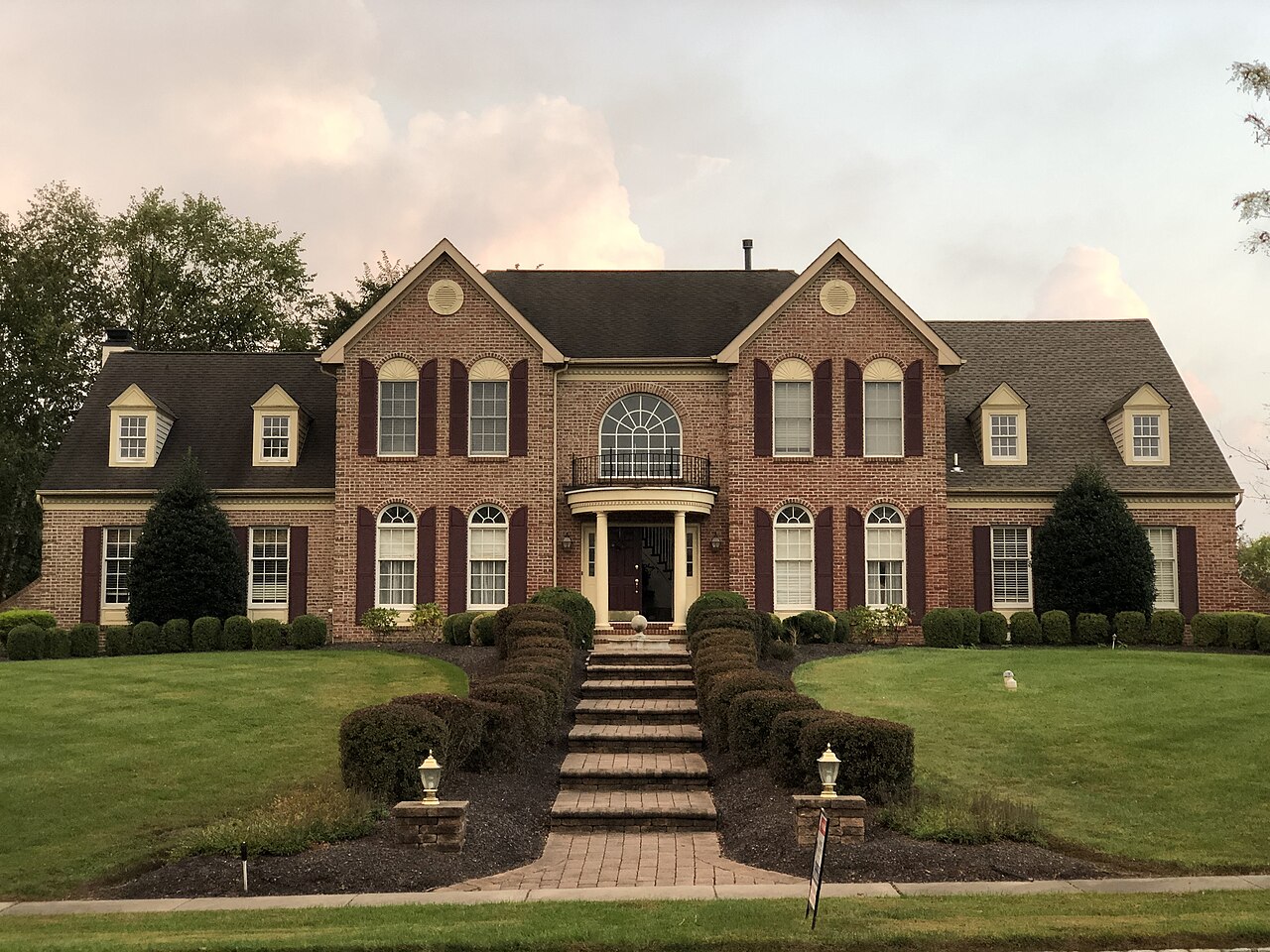
Two nearly identical houses on the same Bucks County street can pay property tax bills that differ by thousands of dollars a year. Nobody is cheating. The explanation is a number that was set in 1972 and has never been reset.
That one fact drives most of what is strange about property taxes here: why millage rates look absurdly large, why your assessment bears no resemblance to what you paid, and why an appeal is one of the few pieces of paperwork that can pay for itself in a year.
The 1972 problem
Bucks County has not conducted a countywide reassessment since 1972. Every parcel still carries a base-year assessed value pegged to 1972 conditions. The county reassesses individual properties when they are subdivided or substantially improved, but it does not reprice the whole county, and Pennsylvania does not require it to.
So the assessed value on your deed is not what your house is worth. Two neighbors with the same floor plan can sit at different assessments because of choices a 1972 assessor made, or because one house was renovated with permits and the other was not. Neither has a right to be assessed like the other. Each has a right to be assessed correctly.
Converting assessed value to market value
To bridge the gap, the State Tax Equalization Board publishes a Common Level Ratio for each county, updated annually. For Bucks the ratio runs around 5.60 percent, giving a CLR factor of about 17.86. Multiply assessed value by the factor to approximate market value: $20,000 assessed implies roughly $357,200, and $35,000 assessed implies roughly $625,100.
That ratio is third-party data and it changes every year. Confirm the current figure with the Bucks County Board of Assessment at 215-348-6219 or with the State Tax Equalization Board. Every appeal below turns on that number, so get it from the source.
The three layers
Three bodies tax your property: the county, your municipality, and your school district. A mill is one dollar per thousand dollars of assessed value.
County millage
| Levy | Mills |
|---|---|
| General County Purposes | 24.00350 |
| Debt Service and Lease Payment | 3.47640 |
| Community College | 1.17770 |
| Parks and Recreation | 0.99240 |
| Total | 29.65000 |
School district millage
All thirteen Bucks County districts, highest to lowest.
| School district | Mills |
|---|---|
| Morrisville Borough | 279.86130 |
| Bristol Township | 237.17440 |
| Pennsbury | 211.14300 |
| Neshaminy | 198.01240 |
| Bensalem | 188.94740 |
| Quakertown | 181.80000 |
| Centennial | 178.69920 |
| Bristol Borough | 161.00000 |
| Central Bucks | 154.90000 |
| Council Rock | 149.96920 |
| Pennridge | 144.39490 |
| New Hope-Solebury | 127.97000 |
| Palisades | 123.41400 |
Municipal millage is the third layer and runs from single digits in some townships to the low twenties in others. The county publishes every rate in one official millage schedule. Look yours up rather than assuming.
Worked example: a Doylestown Township house assessed at $35,000 carries 29.65000 county plus 22.10000 township plus 154.90000 Central Bucks, or 206.65000 mills. Multiply $35,000 by 0.20665 and the annual bill is about $7,233. Our Doylestown neighborhood guide breaks that town down further.
What the school numbers actually tell you
Two things jump out. First, the school district is the bill. School millage runs roughly four to nine times the entire county levy: Palisades at 123.41400 is about 4.2 times the county’s 29.65000, Morrisville at 279.86130 about 9.4 times it. Shopping across district lines, the school rate is the variable that matters and everything else is rounding.
Second, the ordering runs roughly inverse to community wealth. New Hope-Solebury and Palisades sit at the bottom. Morrisville and Bristol Township sit at the top. Morrisville Borough is the smallest district in the county and carries the highest rate, about 2.2 times New Hope-Solebury’s and 2.3 times Palisades’.
That is not a paradox once you see the arithmetic. A district with a large, high-value tax base raises the same dollars at a lower rate. A district with a thin base has to set a higher rate to fund an ordinary budget. High millage often signals a weak tax base rather than lavish spending. Compare total dollars on comparable houses, not rates. Our Bucks County school districts guide covers how the districts differ on more than money.
Reading your bill and when it arrives
Separate bills arrive on separate calendars, collected by your elected local tax collector rather than by the county.
- County and municipal taxes are billed in early March, covering the calendar year.
- School taxes are billed in early July, covering the school fiscal year starting July 1.
- Interim bills go out quarterly when an assessment changes mid-year, which follows new construction or a substantial improvement.
Each bill carries three amounts: a discounted amount in the first window, face in the middle, and a penalized amount after. The windows and percentages are printed on the bill. We are not publishing them because each collector applies them under the Local Tax Collection Law and we could not confirm one countywide figure officially. Read your bill and call your municipal tax collector if the windows are unclear.
Unpaid taxes become a lien and the account goes to the Bucks County Tax Claim Bureau, which issues a Notice of Claim. Unsatisfied, the property can reach upset sale in September of the second year, then judicial sale. Delinquent balances go through the Bureau at 215-348-6274.
The homestead and farmstead exclusion
This is free money, and plenty of eligible homeowners never claim it.
Under the Taxpayer Relief Act, Act 1 of Special Session 1 of 2006, the Commonwealth sends districts gaming revenue, and districts pass it through by reducing the assessed value of qualifying properties before tax is computed. It is not a rebate you chase afterward. It shrinks the number the millage is multiplied against. Two categories qualify.
- Homestead. A dwelling and the parcel it sits on, used as the owner’s primary residence and domicile. Condominium and cooperative units count, as does a portion of a dwelling used as a residence.
- Farmstead. Buildings on a farm of not less than ten contiguous acres, used primarily for commercial agricultural production, housing animals, or storing agricultural supplies and equipment. The property must be the owner’s domicile.
The mechanics:
- You apply once through the county assessment office, not your school district and not your tax collector. Call the Bucks County Board of Assessment at 215-348-6219 for the form.
- The deadline is March 1 preceding the tax year. Miss it and you wait a year. The district must tell you by December 31 whether you were approved.
- The amount is neither guaranteed nor fixed. It depends on the gaming allocation sent to your district, so it moves year to year.
- Rentals, second homes and investment properties do not qualify. The exclusion follows where you actually live.
The Act 1 index
Act 1 also caps how much a district can raise taxes in a year. Above the cap it needs an exception approved by the Pennsylvania Department of Education or a yes vote at referendum. The base index averages the increase in the Pennsylvania statewide average weekly wage with the increase in the federal employment cost index for elementary and secondary schools, so the cap tracks wage growth. Payroll is most of a school budget, so that follows.
Then it adjusts. A district whose market value/personal income aid ratio exceeds 0.4000 gets a higher index: the base index times the sum of 0.75 and that aid ratio. The Department’s example is a 2.4 percent base index at a 0.6000 aid ratio, giving 2.4 x (0.75 + 0.6000), or 3.2 percent.
The counterintuitive result is that less wealthy districts get more headroom to raise rates without asking anybody. Combined with the rate table above, the districts already charging the most have the most legal room to charge more.
Appealing your assessment
What you are actually arguing
You are not arguing market value directly. You are arguing that your assessed value, divided by the common level ratio, implies a market value higher than what your property is really worth.
Run it before you file. Multiply assessed value by the CLR factor and compare to a realistic sale price. If the implied value lands meaningfully above what the house would fetch, you have a case. If it lands at or below market, you do not.
Who appeals, and when
Any property owner can file an annual appeal. So can a taxing body, which people forget. The Bucks County deadline falls on August 1, moving to the next business day when that lands on a weekend, and a successful appeal takes effect the following tax year, not the current one. Confirm the exact date for the current cycle on the Board of Assessment Appeals page. Applications must be received or postmarked by then, and the Board publishes separate residential and commercial forms each cycle.
There is a filing fee. The Board does not publish the amount on its main page, so call 215-348-6219 rather than trusting a figure you read somewhere, including here.
Evidence that works
- Comparable sales, converted properly. Recent arms-length sales of similar nearby properties. Divide each sale price by the CLR factor to get what that assessment should look like, then compare to yours. Do the conversion for the Board rather than making them do it.
- A current appraisal. The strongest single document. On a modest residential appeal the fee can exceed the savings, so run that math first.
- Photographs of condition. Structural problems, a failing roof, water intrusion, deferred maintenance. Condition is the argument comparable sales alone cannot make.
- Documented defects. Easements, flood exposure, wetlands, an unbuildable portion. Bring documents, not descriptions.
What does not work: your bill went up, your neighbor pays less, you cannot afford it, the district wastes money. None of those are assessment arguments and the Board cannot act on them.
The hearing and after
The Board meets the first and third Tuesday of the month at 10am at the Courthouse, 55 East Court Street in Doylestown. Hearings are short and administrative rather than adversarial. Bring organized copies of everything, lead with the CLR math, and be brief. If the decision goes against you, you can appeal to the Bucks County Court of Common Pleas within the window stated on your notice. That step generally warrants an attorney.
The honest warning
An appeal opens your assessment for review in both directions. The Board can raise it. If your property is under-assessed relative to the ratio, filing is how you find out, and the correction will not favor you. Do the arithmetic first, and if the answer is ambiguous, leave it alone. Weighing a renovation that would trigger a reassessment? Our home project cost guide comes first.
Other relief programs
Property Tax/Rent Rebate
The Property Tax/Rent Rebate Program serves Pennsylvanians 65 and older, widows and widowers 50 and older, and people with disabilities 18 and older. The household income limit sits around $48,110 and is adjusted annually, so confirm the current cap with the Department of Revenue. Standard rebates run $380 to $1,000 on a sliding scale, with supplements at the lowest incomes. The annual deadline is December 31. Apply through myPATH, by mail, or in person.
Clean and Green
Act 319 of 1974 assesses qualifying land on use value rather than market value, in three categories: agricultural use, agricultural reserve, and forest reserve. The general threshold is ten acres, with an exception for smaller parcels meeting an income test. Changing the use later triggers roll-back taxes plus interest, which is the trap. Applications go to the county assessment office. Confirm the deadline and thresholds with the Board of Assessment at 215-348-6219. We could not verify them against a current official page and will not print a date we cannot stand behind.
Disabled veterans
Pennsylvania exempts real estate tax for honorably discharged veterans with a total, permanent, service-connected disability who meet a financial need test. You apply through the county Director of Veterans Affairs and the State Veterans Commission decides. Start with the Bucks County Department of Military and Veterans Affairs, not a summary like this one.
The other taxes on your household
Property tax is not the whole local picture.
Earned Income Tax. Under Act 32 of 2008, municipalities and school districts levy a local earned income tax, commonly around one percent combined and split between them, withheld by your employer. Each jurisdiction has a six-digit Political Subdivision code, the PSD code, telling an employer where to send the money. Get yours wrong on the residency certification form and the withholding goes to the wrong place, which you unwind at filing. Look up the PSD code and rate for any address with the state’s address lookup tool, and see the DCED local income tax page for employer rules.
Local Services Tax. A flat annual tax withheld where you work rather than where you live, with a low-income exemption you have to claim.
State income tax. Pennsylvania taxes a flat 3.07 percent across eight classes of income, with no standard deduction and no personal exemption, and losses in one class cannot offset gains in another. Retirement income is generally not taxed, which is a real part of why people retire here.
Still choosing a town? Our moving to Bucks County guide and the town directory pair with the tables above, and the rest of our reference pages sit in the guides index.
Sources and Further Reading
- Bucks County official millage rate schedule
- Bucks County Board of Assessment Appeals
- Bucks County Board of Assessment
- Bucks County Tax Claim Bureau
- Bucks County municipal tax collectors
- PA DCED homestead and farmstead exclusion
- PA Department of Education Act 1 index
- PA Property Tax/Rent Rebate Program
- PA DCED local income tax information
- PA local tax and PSD code address lookup
- PA personal income tax
Millage rates, common level ratios, income limits, filing deadlines and program rules are updated annually. This page is general information, not tax or legal advice, and it is no substitute for the county assessment office or a licensed professional. If you find something out of date or wrong, send us a correction and we will fix it.