Doylestown is two municipalities, not one. Doylestown Borough covers about 2.2 square miles and holds roughly 8,300 people. Doylestown Township wraps around it, covers about 15.4 square miles, and holds close to 18,000. They have separate governments, separate millage rates, separate police arrangements and a genuinely different daily rhythm. Most relocation guides treat them as a single place. Most buyers learn the difference somewhere between the first showing and the closing table.
This guide separates them, then covers the things that actually change a decision: housing stock, the tax bill, school assignment, the train, and what happens if you buy inside the historic district.
Borough or township, and what changes at the line
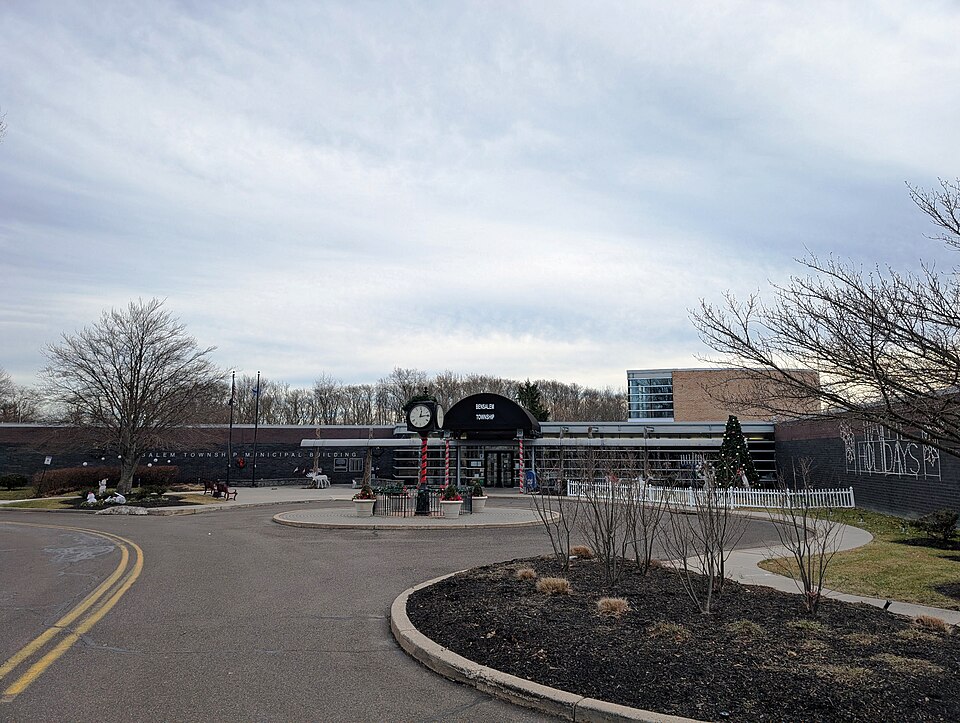
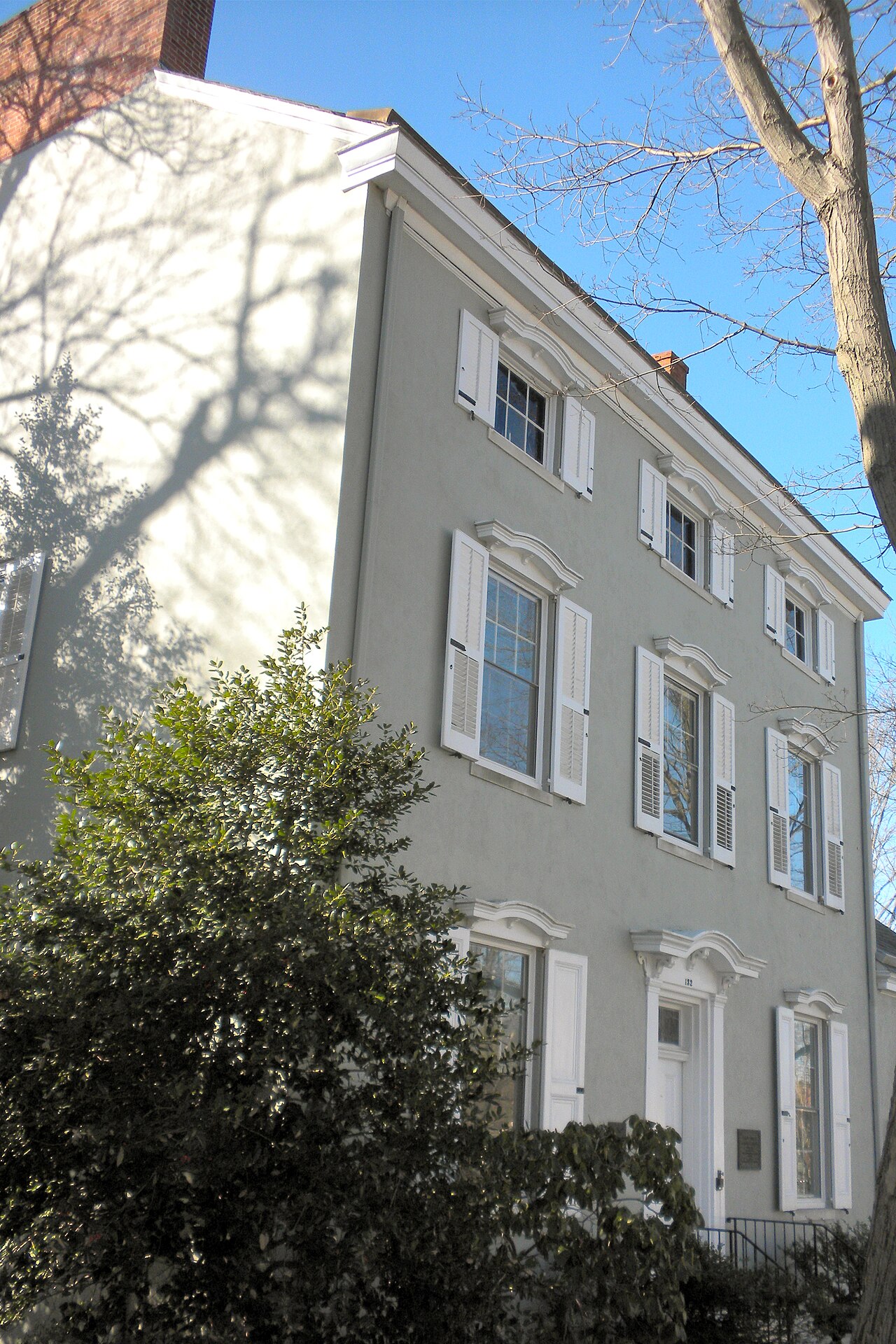
The borough is the walkable part. Victorian and Federal houses on narrow lots, brick sidewalks, a downtown grid you can cross on foot in fifteen minutes, and the county courthouse in the middle of it. It incorporated as a borough in 1838 and is the county seat. The township is the ring around it: postwar subdivisions, newer cul-de-sac development, larger lots, strip centers on the arterials, and the county office campus and correctional facility.
Three practical things change when you cross the line.
- Police. The borough contracts into the Central Bucks Regional Police Department, a three-borough force shared with Chalfont and New Britain, headquartered on North Broad Street. The township runs its own Doylestown Township Police Department.
- Trash. Neither municipality collects it. The borough tells residents to contract with a private hauler directly. The township does the same but licenses a short list of approved haulers and publishes each one’s current residential rate on that page, which makes comparison shopping easy. Budget for it either way. It is not in your tax bill.
- Permits and design review. The township has a code and zoning office with its own fee schedule. The borough has that plus a Historic and Architectural Review Board with authority over a large share of the older housing stock. More on that below, because it is the single biggest surprise for borough buyers.
Housing: what you get for the money
The borough and the township are not really competing for the same buyer, which is the useful thing to understand before you start comparing listings.
Borough stock
Mostly nineteenth and early twentieth century. Twins and rowhouses near the core, detached Victorians on the residential streets radiating out, a handful of mid-century infill, and some newer condominium and townhouse product on former institutional parcels. Lots are small. Off-street parking is not guaranteed and is a real line item in the value of a house here. Systems are old, basements are stone, and a house that has not been updated will need money.
Township stock
Mostly postwar through present. Split levels and colonials from the 1960s through the 1980s, larger 1990s and 2000s subdivisions, and newer construction and active-adult communities on the edges. Lots are bigger, garages are standard, and the maintenance profile is ordinary rather than specialist.
On price, the ordering is more useful than a number that goes stale. Per square foot, a restored borough Victorian on a walkable street generally commands the highest figures in the area, because supply is fixed and the location cannot be replicated. New construction in the township prices high in absolute terms because the houses are large. The best dollar-per-square-foot value is usually a 1970s or 1980s township colonial that needs a kitchen. Verify current medians with a licensed agent pulling Bright MLS rather than trusting any number printed on a web page, including this one. We have not published a median here on purpose.
If you are weighing Doylestown against other parts of the county, our moving to Bucks County guide covers the wider comparison, and the town directory has the rest.
The tax bill
Three separate taxing bodies bill you: the county, your municipality, and Central Bucks School District. Here are the official rates.
| Bucks County levy | Mills |
|---|---|
| General County Purposes | 24.00350 |
| Debt Service and Lease Payment | 3.47640 |
| Community College | 1.17770 |
| Parks and Recreation | 0.99240 |
| County total | 29.65000 |
| Doylestown Borough | Doylestown Township | |
|---|---|---|
| Municipal millage | 21.84000 | 22.10000 |
| County millage | 29.65000 | 29.65000 |
| Central Bucks School District | 154.90000 | 154.90000 |
| Total | 206.39000 | 206.65000 |
The municipal difference between borough and township is about a quarter of a mill, which is close to noise. The school district is three quarters of the bill in both. Anyone who tells you the borough is the expensive one on taxes is talking about the size of the assessment, not the rate.
Now the part that confuses everyone. Bucks County has not conducted a countywide reassessment since 1972. Every parcel carries a 1972 base-year assessed value, which is why the mills look enormous against an assessment that reads like a used car. To convert, the Commonwealth publishes a Common Level Ratio factor for each county, currently about 17.86 for Bucks. Multiply the assessed value on the deed by that factor and you get an approximation of current market value. A $60,000 assessment implies roughly $1,071,600.
That factor is third-party data and it moves. Confirm it with the Bucks County Board of Assessment Appeals at 215-348-6219 or with the State Tax Equalization Board before you rely on it for anything. We break the whole system down, including how to appeal an assessment, in Bucks County property taxes, explained.
Schools
Both municipalities sit entirely in Central Bucks School District, which enrolls roughly 16,700 students across 23 schools and is one of the largest districts in Pennsylvania. It runs fifteen elementary schools, five middle schools, and three high schools: Central Bucks East, Central Bucks West and Central Bucks South.
Which high school a Doylestown address feeds is one of the most searched questions about the area, and it does not map to municipal boundaries. The attendance lines cut through both the borough and the township. Two houses on opposite sides of the same street can feed different high schools, and boundaries get redrawn when enrollment shifts.
So do this instead of guessing: give the exact street address to the district and ask them to confirm the elementary, middle and high school assignment in writing. Do it before you make an offer, not after. A listing agent’s claim about a school feed is not a source. Our Bucks County school districts guide covers how the thirteen districts compare countywide.
Private, parochial and higher education
The area supports a deep independent school bench, including Catholic parish schools, Quaker and Montessori programs, and several college-preparatory day schools within a short drive. Delaware Valley University, founded in 1896, sits on East Butler Avenue in the township and shapes the area more than most people expect. It has its own Regional Rail stop, its programs in agriculture, animal science and landscape architecture keep working farmland in production nearby, and its campus events are open to the public.
Getting around
Doylestown is the northern terminus of SEPTA’s Lansdale/Doylestown Regional Rail line, which runs to Center City Philadelphia. It carries about 9,257 riders on an average weekday, making it the second busiest line in SEPTA’s Regional Rail network. The Bucks County stations, heading south from the end of the line, are Doylestown, Delaware Valley University, New Britain and Chalfont.
We are not printing a travel time, because schedules change and the number varies a lot between express and local runs. Pull the current timetable on SEPTA’s site and check the specific trains you would actually ride, in both directions, including the last one home.
By road, PA Route 611 runs north to south through the area and connects to the Pennsylvania Turnpike at Willow Grove. US Route 202 runs northeast to southwest, with the 202 Parkway bypass carrying through traffic around the borough. Both back up at peak. The borough grid was laid out for carriages and it shows.
Downtown
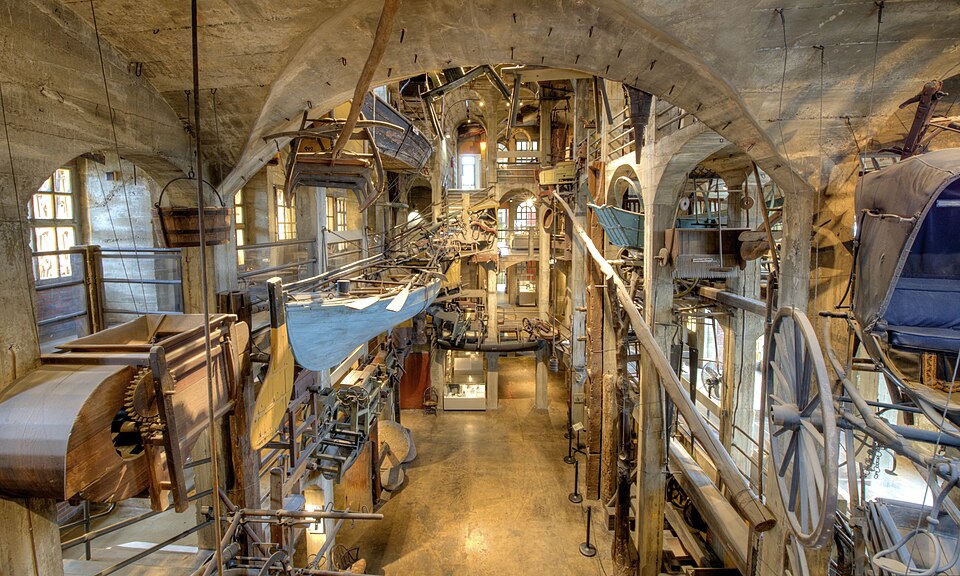
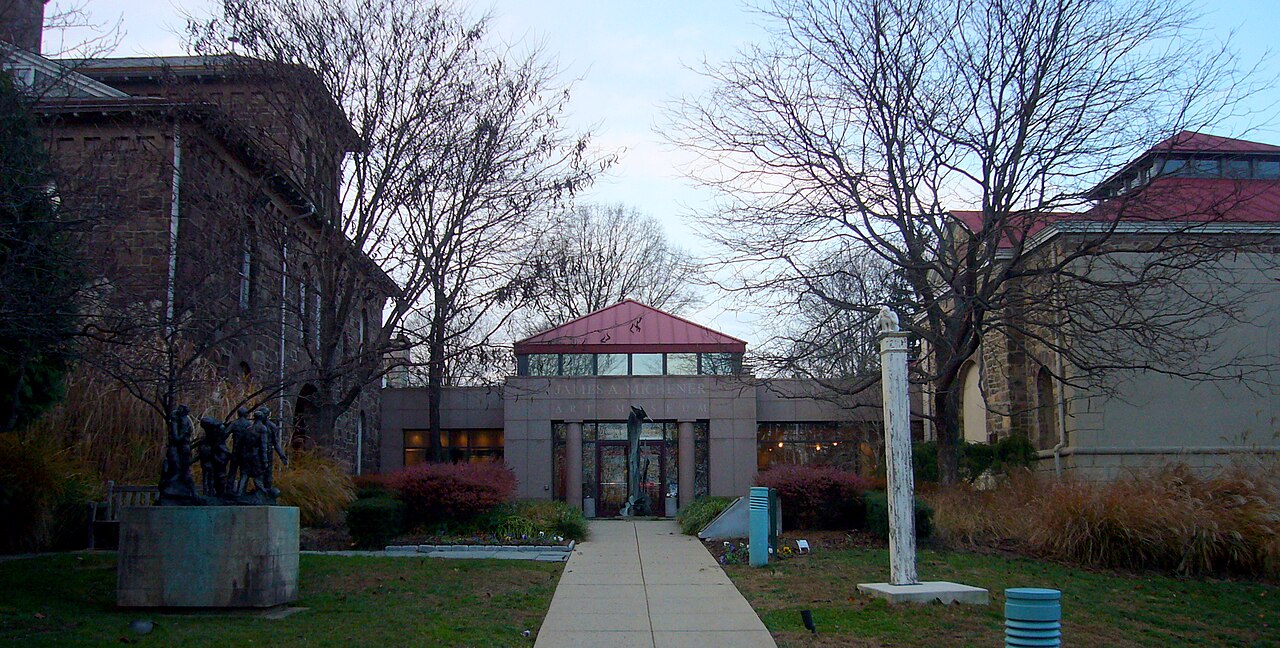
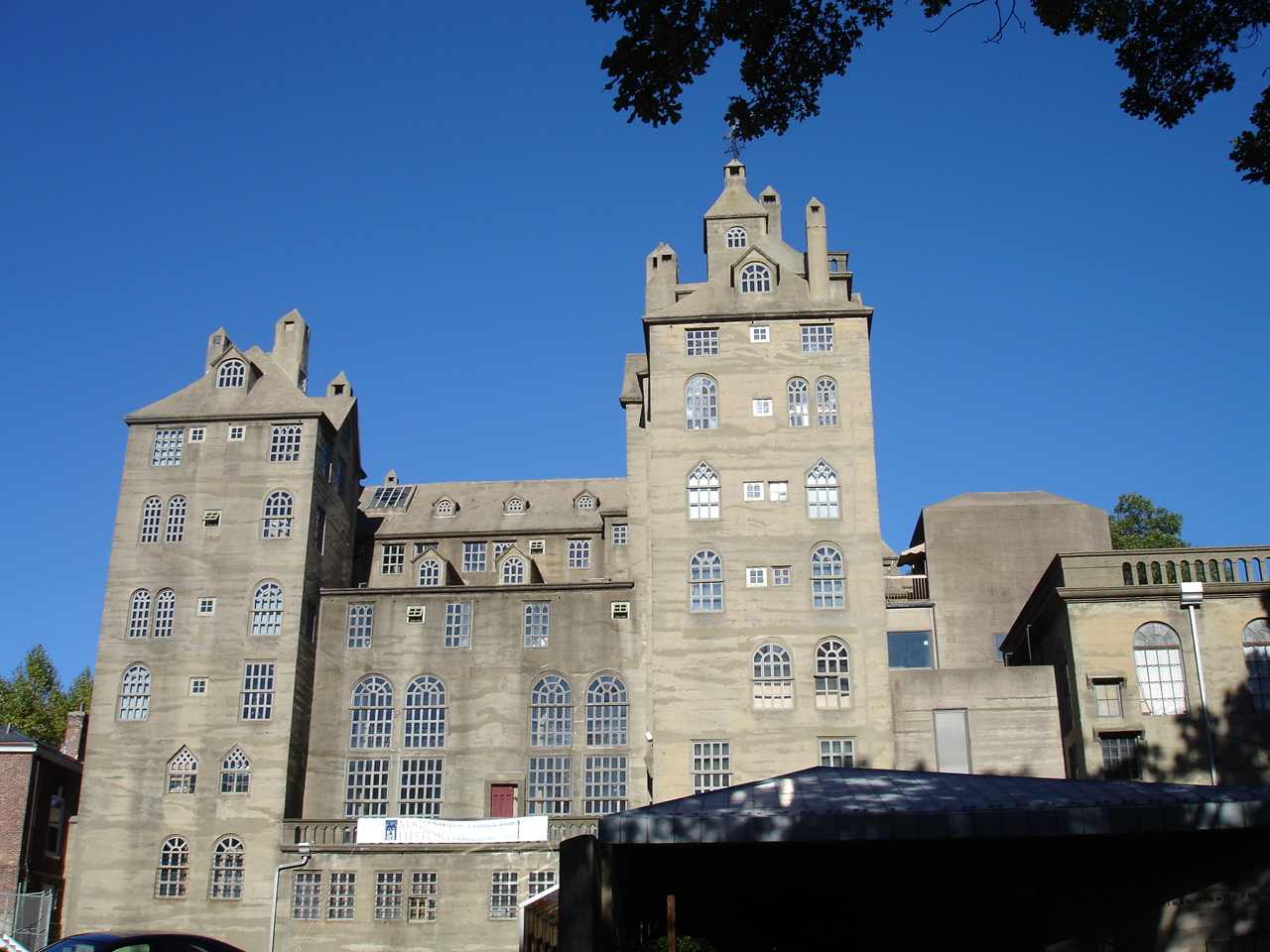
The cultural density here is unusual for a town of 8,300. Henry Chapman Mercer left three concrete buildings behind, two of them open to the public: the Mercer Museum, a castle stacked with pre-industrial American tools and a research library holding 20,000 books and 2,500 feet of county archives, and Fonthill Castle, his 44-room house with 18 fireplaces and more than 200 windows. The James A. Michener Art Museum on South Pine Street occupies a converted former county prison and holds one of the strongest collections of Pennsylvania Impressionism anywhere.
The County Theater has been showing films on State Street since 1938 and now runs as a nonprofit arthouse. The Doylestown Inn anchors the corner of State and Main. Central Park in the township holds Kids Castle, a large wooden play structure that is the default destination for anyone visiting with children. The borough runs a seasonal farmers market and a calendar of monthly street events. Check the borough site for current dates, and see our Doylestown restaurant guide for where to eat around all of it.
Parking, the useful version
Here is the fact worth memorizing. Borough meters run Monday through Saturday, 9am to 5pm only. After 5pm on any day, and all day Sunday, parking is free. Meters are also off on a published list of holidays.
Within those hours, three-hour meters run $1.75 an hour with a small card fee, and yellow-banded ten-hour meters run $0.50 an hour in quarters, with a six-month commuter permit available. There are municipal lots on Court Street, at Pine and State, on Oakland Avenue, at Plaza East, on Dommel Way and at Hamilton and State, plus two county garages on Broad Street. Fifteen-minute free spaces exist on State, Main and Oakland for quick errands. Residents can get a no-cost residential permit with proof of residency.
Buying in the historic district
Doylestown Borough established its historic district in 1970. If the house you want is inside it, a nine-member Historic and Architectural Review Board reviews your exterior plans before you can pull a construction permit. This catches people off guard and it is worth understanding before you write an offer.
What HARB reviews: exterior building changes, additions, new construction, demolition and signs, covering exterior architectural features visible from a public street, including fences and retaining walls.
What it does not review: your interiors, and not repainting or color choice either, as long as no other construction is planned. That last point gets misreported constantly.
The process, in order:
- Confirm the property is actually in the district. The line is not obvious from the street.
- Submit your application to the Borough Zoning and Planning Office at least ten business days before the monthly HARB meeting. HARB normally meets the fourth Thursday of the month at 7pm at 10 Doyle Street.
- Attend the meeting. You must be present for your application to be reviewed. Sending drawings alone does not work.
- HARB makes a recommendation and you receive a written decision by mail.
- Borough Council issues the Certificate of Appropriateness. Only then does the construction permit process start.
Plan on adding a month or more to any exterior project timeline, and price windows, roofing and siding with the review in mind. Our Bucks County home project cost guide has the underlying numbers, and the rest of our local reference pages are in the guides index.
Sources and Further Reading
- Doylestown Borough official site
- Doylestown Township official site
- Bucks County millage rates, official schedule
- Bucks County Board of Assessment Appeals
- Doylestown Borough Historic District and HARB
- Doylestown Borough parking
- Central Bucks School District
- SEPTA Lansdale/Doylestown Line
- Mercer Museum and Fonthill Castle
- James A. Michener Art Museum
- County Theater
- Delaware Valley University
- Central Bucks Regional Police Department
Millage rates, program rules and municipal fees are updated annually, and attendance boundaries change. This page is general information, not tax, legal or real estate advice. If you spot something out of date or wrong, send us a correction and we will fix it.